1372 to 1464
Genoese Occupation of Famagusta
A coronation riot in Famagusta in 1372 leads to a Genoese invasion. Genoa holds the kingdom's richest port for about ninety years, until 1464.
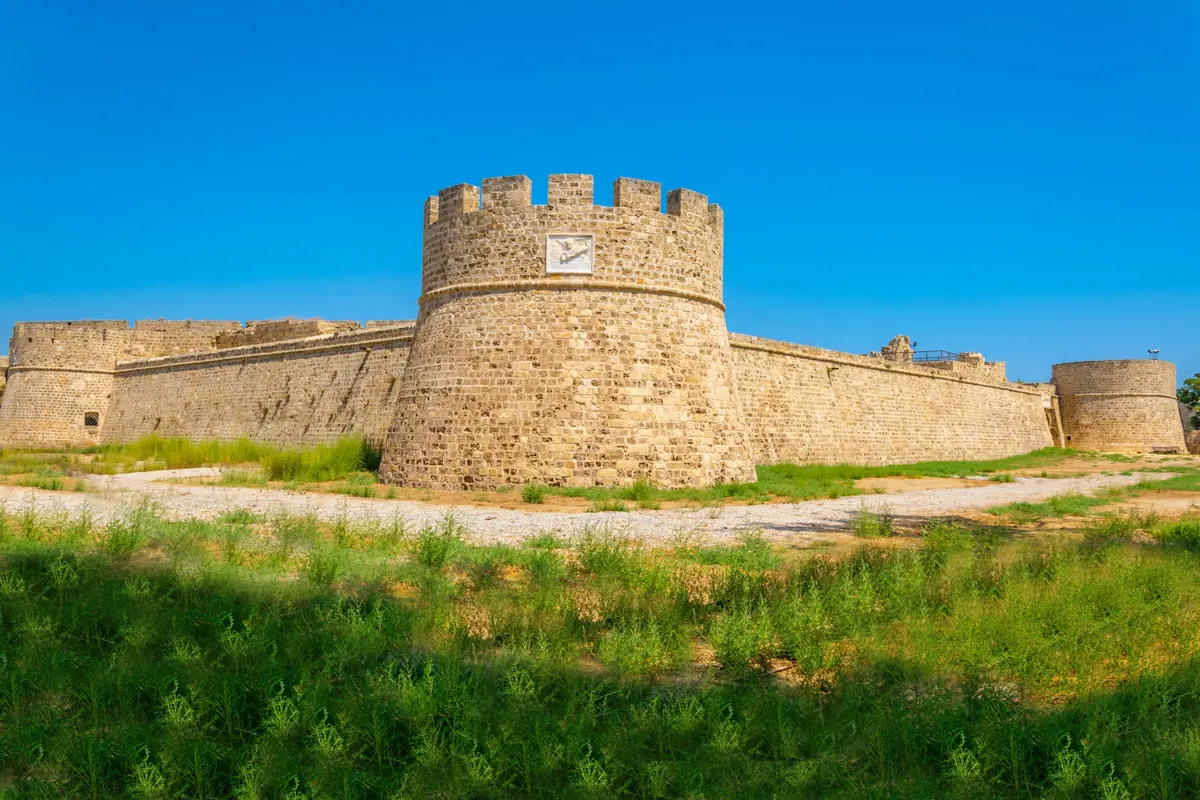
By the 1370s Famagusta (Gazimağusa) was the commercial heart of the Kingdom of Cyprus. Italian merchants from Genoa and Venice competed fiercely for its trade, and their rivalry spilled into the kingdom’s politics. King Peter I had been murdered by his own nobles in 1369, and his young son Peter II came to the throne.
Peter II was crowned King of Cyprus in Nicosia on 6 January 1372 and King of Jerusalem in Saint Nicholas Cathedral in Famagusta on 10 October 1372. During the Famagusta celebrations, the Genoese and Venetian representatives quarrelled over which of them should take the place of honour holding the reins of the king’s horse, a question of honour and precedence. The dispute turned into street fighting with many deaths. Genoese merchants were arrested and blamed, and Genoa decided to retaliate.
In 1373 a Genoese expedition, financed by wealthy citizens and led by Pietro di Campofregoso, brother of the Doge, invaded Cyprus. Famagusta was taken after its gates were opened, supposedly for negotiations. Under the settlement of 1374 the king agreed to pay a heavy indemnity, Famagusta passed under Genoese control as security, and Peter’s uncle James was seized as a hostage.
Genoa held Famagusta for about ninety years. Without the port and its customs income, the Lusignan crown was poorer and more dependent on outside help. James II finally recovered the city in 1464, during his struggle with his half sister Charlotte for the throne.
Famagusta is often linked with Shakespeare’s Othello, but that connection belongs to the later Venetian period, after Venice took over Cyprus in 1489. The citadel in Famagusta known as Othello’s Tower is a Lusignan castle remodelled by the Venetians. Britannica notes a tradition that the character was inspired by Cristoforo Moro, Venetian lieutenant governor of Cyprus from 1506 to 1508. The story has nothing to do with the Genoese occupation.