1197
Cyprus Becomes a Kingdom
Aimery de Lusignan is crowned King of Cyprus in Nicosia under the Holy Roman Emperor, after Pope Celestine III sets up a Latin Church on the island.
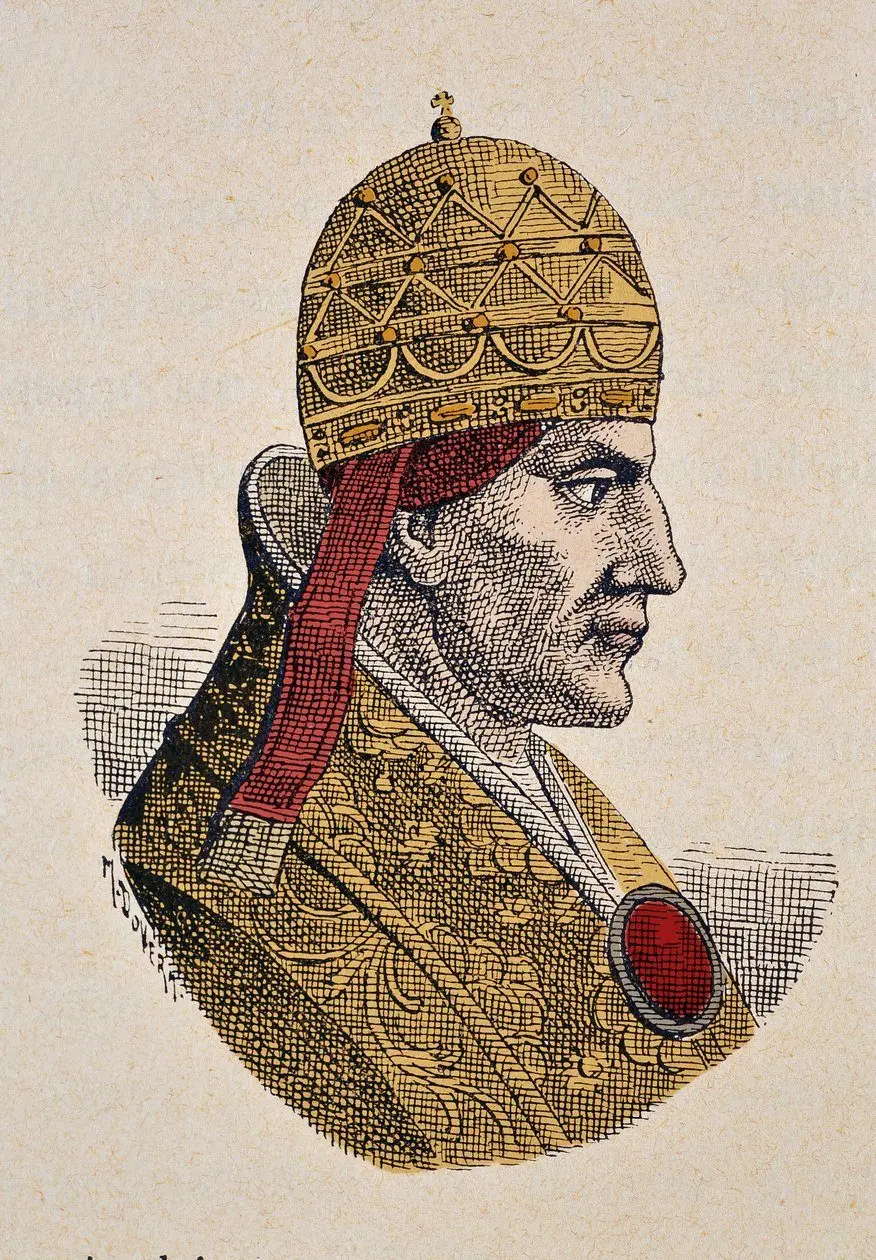
When Aimery de Lusignan succeeded his brother Guy in 1194, he was only Lord of Cyprus. A royal title would give him far greater standing among the rulers of the eastern Mediterranean. He looked for it in two places: the Holy Roman Emperor and the Pope.
In October 1195 Aimery’s envoy, Rainier of Gibelet, swore loyalty on his behalf to Emperor Henry VI at Gelnhausen in Germany. Aimery offered to accept the emperor as his overlord in return for a crown. At the same time he sent the archdeacon of Laodicea to Pope Celestine III to ask for a Latin, meaning Roman Catholic, church structure for the island.
Both requests succeeded. In 1196 the Pope created the Latin archbishopric of Nicosia, with Aimery’s chancellor Alan as its first archbishop, and by December that year a papal letter was already calling Aimery king. In September 1197 Conrad, Bishop of Hildesheim, acting for Henry VI, crowned Aimery King of Cyprus in Nicosia and received his homage. The crown therefore came from the emperor, with the Pope’s support, rather than from a single act of papal recognition as is sometimes said.
The new Latin Church brought tension with the Greek Orthodox Church, to which most Cypriots belonged. Over the following decades Latin authorities pressed to reduce the Orthodox bishoprics from fourteen to four and to place Orthodox bishops under Latin ones. Relations were often strained, some Orthodox bishops went into exile, and in 1231 thirteen monks of Kantara were executed after refusing to withdraw charges of heresy against the Latins.
A settlement came with the Bulla Cypria, issued by Pope Alexander IV in 1260. It confirmed four Orthodox bishops under Latin oversight but also protected them, since only the Pope could depose one. Recent historians stress that ordinary Greek and Latin Christians increasingly lived side by side, and by the fourteenth century there were mixed marriages and shared places of worship.