14 to 16 August 1974
Second Turkish Offensive
Hours after talks in Geneva fail, Turkey resumes its advance. By 16 August its forces hold about 36 per cent of Cyprus, including Famagusta and Morphou.
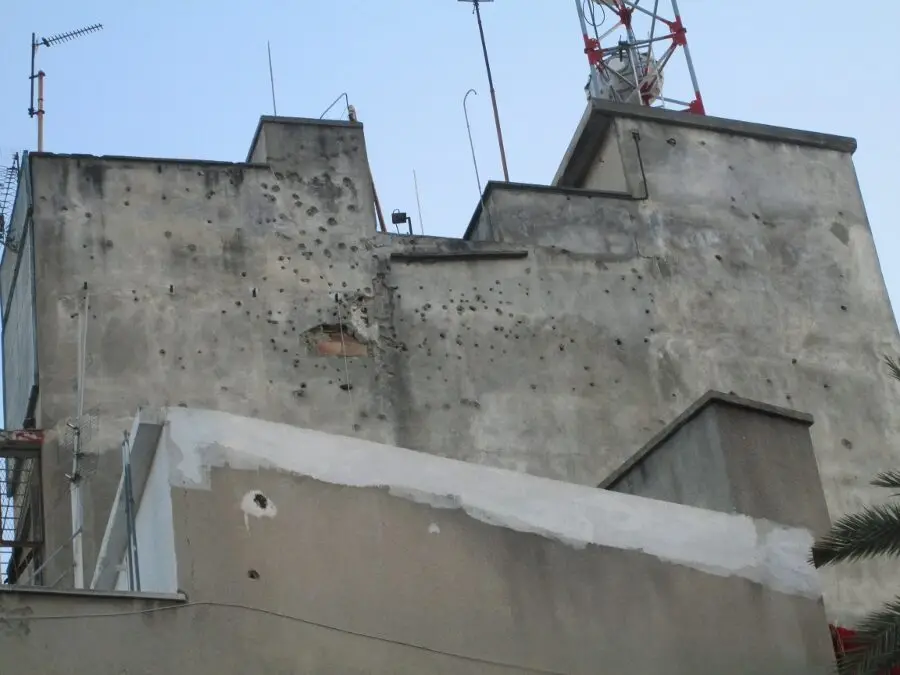
The second Geneva conference broke down in the early hours of 14 August, and within hours Turkish aircraft, artillery and ground forces went back on the offensive. Turkey and Turkish Cypriots call this the second phase of the Peace Operation, a step they present as necessary once the talks had failed. Greek Cypriots regard it as the second phase of the invasion, launched after both the junta in Athens and the coup regime in Nicosia had already fallen. On 16 August the UN Security Council formally recorded its disapproval of the unilateral military actions against the Republic of Cyprus.
Turkish columns pushed quickly east to Famagusta (Gazimağusa) and west to Morphou (Güzelyurt), and took the northern part of Nicosia. Turkey declared a ceasefire at 6 p.m. on 16 August, by which time its forces held about 36 per cent of the island. That line, with the UN buffer zone along it, still divides Cyprus.
The human cost fell on both communities. PRIO researchers put the number of Greek Cypriots displaced from the north, including Maronites, Armenians and Latins, at almost 162,000; other estimates run as high as 200,000. About 6,000 Greek Cypriots were taken prisoner, and Greek Cypriots who stayed in the north were gathered in schools and churches, where mistreatment, rapes and some killings were recorded. In the south, thousands of Turkish Cypriot men were held in stadiums and schools, and Greek Cypriot gunmen of EOKA B killed more than 100 Turkish Cypriot civilians, including at Maratha, Santalaris and Aloda. Euronews puts deaths from the fighting of 1974 at more than 3,000, mostly civilians. Turkish figures give 498 Turkish soldiers killed, along with about 70 Turkish Cypriot fighters, and around 400 Greek Cypriot and Greek soldiers died. The bicommunal Committee on Missing Persons lists 2,002 people missing from the 1960s and 1974, 1,510 Greek Cypriots and 492 Turkish Cypriots; by mid 2026 just over half had been identified.
Under the Vienna agreement of August 1975, Turkish Cypriots still in the south were allowed to move north, and Greek Cypriots in the north could stay or move south. In all, about 48,000 Turkish Cypriots were displaced from the south after 1974, almost 60,000 counting those displaced earlier in the 1960s. Of roughly 10,000 Greek Cypriots who first chose to stay in the north, barely 1,000 remained by 1981. The two communities now lived almost entirely apart.
Sources and further reading
- PRIO Cyprus Centre: Displacement in Cyprus, An Overview of Events and Perceptions (2012)
- Euronews: Cyprus marks 51 years since Turkish invasion that led to island nation's partition (2025)
- Wikipedia: Military operations during the Turkish invasion of Cyprus
- Cyprus Mail: Guterres praises efforts of missing persons committee (2026)